


Turning Your Furnace On This Fall? Know What Is Normal and When You Need Furnace Repair
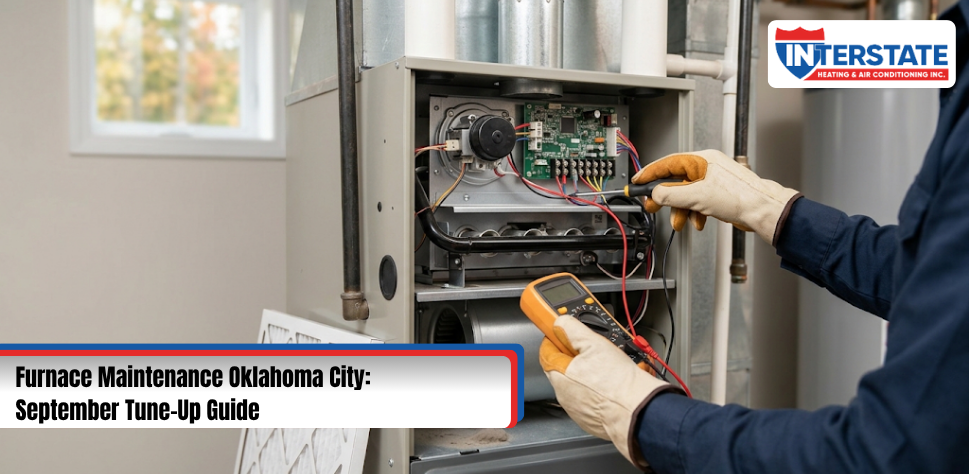
It is September in Oklahoma City, the afternoon temperature is still pushing well into the 80s, and your air conditioner may be doing far more work than your furnace. Heating repair probably is not on your mind yet.
That is exactly why September is a smart time to schedule furnace maintenance.
You are not preparing because you need heat today. You are using the quiet stretch between peak cooling season and the first real cold fronts to make sure your heating system is clean, safe, and ready. If a technician finds a weak ignitor, dirty flame sensor, restricted filter, loose electrical connection, or combustion problem now, you have time to deal with it without waking up to a cold house.
Oklahoma City’s normal September average high is about 83.9°F, so homeowners should not treat September like winter. It is a preparation month.
This guide explains what a professional furnace tune up includes, what you can check yourself, what maintenance costs in 2026, and why scheduling before cold weather gives you more control.
Why September Is the Right Time for Furnace Maintenance
September in central Oklahoma is usually more late summer than deep fall. That is exactly what makes it useful for heating maintenance.
Oklahoma City’s 1991 to 2020 climate normal shows an average September high of about 83.9°F and an average low around 61.5°F. In September 2025, the average daily high reached 86°F.
That means most homeowners will still use their AC on plenty of September afternoons. The furnace may sit untouched for weeks.
You Have Time to Plan
If your technician finds a worn component during a September furnace tune up, you can make a decision without the pressure of a freezing house.
HVAC Contractors Are Not Yet in Peak Heating Demand
Heating service demand rises quickly when the first strong cold front arrives. Scheduling before then usually gives you more flexibility.
Your Furnace Has Been Sitting Idle
Dust can collect around heating components during spring and summer. Electrical connections, ignition parts, controls, and filters also deserve inspection before months of regular use.
ENERGY STAR recommends professional heating-system maintenance in fall before winter demand increases.
HVAC Advice: Do not wait until you need the furnace every night to find out whether it works properly. September maintenance is less about using the furnace now and more about knowing it will be ready later.
What Professional Furnace Maintenance Actually Includes
Furnace maintenance is preventive service. It is different from furnace repair because the technician is looking for developing problems before the system stops working.
A proper appointment should cover far more than changing the filter.
Airflow and Filter Condition
The technician checks the filter and airflow through the system. Restricted airflow can make a furnace operate hotter than intended and may eventually trigger safety controls.
ENERGY STAR recommends checking HVAC filters monthly and replacing them when dirty.
Electrical and Mechanical Components
Maintenance commonly includes checking electrical connections, motors, controls, bearings, and operating conditions. Loose electrical connections can affect reliability and equipment life.
Ignition and Combustion Components
On a gas furnace, the technician can inspect the ignitor, burners, flame sensor, gas pressure, safety controls, and combustion-related components.
The flame sensor confirms that a safe flame exists. If it cannot detect one during operation, the furnace may shut the gas valve as a safety measure.
Thermostat and System Controls
The thermostat should call for heat correctly and shut the system off at the proper temperature.
Interstate Heating & Air Conditioning currently lists thermostat checks, electrical inspection, moving-part lubrication, filter service, system-control testing, duct inspection, and furnace gas-pressure adjustment as part of its heating maintenance checklist.
Pro Tip: A tune up should give you useful information. Ask the technician to explain anything that is worn, dirty, unsafe, or likely to need attention during the coming heating season.
Signs Your Furnace Should Move to the Top of Your Fall Checklist
Every furnace can benefit from routine maintenance, but some systems deserve earlier attention than others.
Prioritize fall furnace inspection Oklahoma City service if you notice any of these conditions.
- You skipped maintenance last year. Two heating seasons without an inspection gives wear and dirt more time to accumulate.
- Your furnace is more than 10 years old. Age does not automatically mean replacement, but older systems deserve closer attention.
- Last winter brought uneven heating. Cold bedrooms or temperature differences may point to airflow, duct, blower, or system-balance issues.
- Your heating bills climbed unexpectedly. Higher energy use can have several causes, including dirty equipment or poor airflow.
- The furnace made unusual noises last season. Grinding, rattling, repeated clicking, or delayed startup deserves investigation before regular use resumes.
- You frequently changed filters because they became dirty. Fast filter loading can point to household dust, duct leakage, airflow conditions, or filtration issues.
- You cannot remember the last professional tune up. That is usually reason enough to put maintenance on the calendar.
None of these signs automatically means you need furnace repair. That distinction matters.
September should not be framed as a month when every furnace is about to fail. It is a month when you have time to find out whether anything needs attention.
HVAC Advice: If your furnace worked last winter but seemed louder, slower, or less even than before, tell the technician exactly what you noticed. Maintenance visits are more useful when there is a clear operating history.
What Happens If You Skip Fall Heating Maintenance
Skipping one tune up does not guarantee your furnace will fail. Preventive maintenance is about reducing avoidable risk, not predicting a breakdown.
The problem is that small issues often stay hidden while the furnace is not running.
A dirty filter can reduce airflow. A weakening ignitor may continue working until it suddenly does not. Loose electrical connections can worsen over time. Dirt on burners or sensors can affect reliable operation.
Waiting until winter can lead to:
- Higher risk of an unexpected no-heat call
- Reduced heating efficiency
- More wear on motors and operating components
- Poor airflow and uneven room temperatures
- Safety issues going unnoticed
- Less appointment flexibility during cold weather
- Small service issues becoming larger repairs
For fuel-burning equipment, annual inspection also carries a safety benefit. The U.S. Consumer Product Safety Commission recommends professional inspection of fuel-burning heating systems, including furnaces, chimneys, flues, and vents.
Carbon monoxide is especially important because you cannot see or smell it.
Preventive maintenance cannot guarantee that a part will never fail. It can help identify visible wear, unsafe conditions, and poor operation before you rely on the furnace every day.
If your furnace has not been professionally checked since last heating season, September is a practical time to do it. Interstate Heating & Air Conditioning provides heating maintenance across Oklahoma City, Edmond, Moore, Norman, and Midwest City.
DIY Furnace Maintenance vs. Calling a Licensed HVAC Professional
You can handle several simple fall tasks yourself. Internal furnace maintenance is different.
What You Can Handle
Homeowners can safely take care of basic preparation:
- Check the air filter. Replace it when dirty and use the size recommended for your system.
- Clear supply and return vents. Furniture, rugs, and boxes can restrict airflow.
- Check thermostat batteries. Replace weak batteries before heating season.
- Clean around the furnace. Keep storage, cardboard, paint, and other combustibles away from heating equipment.
- Test smoke and carbon monoxide alarms. Replace batteries as needed and follow the alarm manufacturer’s replacement guidance.
- Look at the exterior vent termination. Make sure visible openings are not blocked by debris.
When You Must Call a Pro
A licensed HVAC technician should handle internal electrical components, gas pressure, combustion, burners, ignition systems, safety controls, blower diagnostics, and furnace disassembly.
Oklahoma mechanical contractors are regulated by the Oklahoma Construction Industries Board.
As of 2026, an active mechanical contractor generally must maintain a $5,000 corporate surety bond and evidence of at least $50,000 in commercial general liability insurance.
Safety Notice: Gas furnaces and HVAC systems connected to electrical components should be inspected and serviced by qualified professionals. Improper work can create gas, carbon monoxide, fire, or electrical hazards. If you smell natural gas, leave the building immediately and call your gas utility from a safe location.
How a Professional Furnace Tune Up Works
A good furnace tune up should be systematic. You should know what the technician checked and whether anything needs attention.
1. Review the System History, About 5 to 10 Minutes
Tell the technician about noises, temperature problems, high bills, previous repairs, or issues from last winter.
2. Check Thermostat Operation, About 5 to 10 Minutes
The technician verifies that the thermostat communicates correctly with the heating system and responds to temperature settings.
3. Inspect the Furnace, About 20 to 40 Minutes
Depending on the equipment, the technician checks:
- Filters and airflow
- Blower components
- Electrical connections
- Ignition components
- Flame sensor
- Safety controls
- Burner condition
- Gas pressure
- Duct connections
4. Test a Heating Cycle, About 10 to 20 Minutes
Even if September weather is warm, the furnace can be operated briefly for testing. The goal is not to heat the house for hours.
The technician watches the startup sequence, heating operation, blower response, and shutdown.
5. Identify Maintenance or Repair Needs
A good company separates preventive service from actual repairs. If a component needs replacement, you should receive an explanation before additional work starts.
6. Review the Results
You should leave the appointment knowing whether the furnace is ready, whether maintenance was completed, and whether anything should be monitored.
Interstate’s current heating-maintenance checklist includes thermostat checks, electrical inspection, lubrication, filters, controls, duct inspection, and furnace gas-pressure adjustment.
Furnace Maintenance Cost in Oklahoma City in 2026
Furnace maintenance is usually much less expensive than a major heating repair.
Pricing varies by system type, number of systems, accessibility, filter type, and the scope of inspection.
Interstate’s Shield Protection Plan currently advertises two precision tune ups each year, one in fall and one in spring. The plan also lists priority service, repair discounts, indoor air quality discounts, equipment discounts, no overtime charges, and a two-year parts warranty for members.
A legitimate maintenance quote should clearly explain what the tune up includes.
Watch for these red flags:
- A tune up that consists only of changing the filter
- Immediate pressure to replace the furnace without testing it
- No explanation of inspection findings
- No Oklahoma mechanical license information
- Safety claims without supporting measurements or inspection
- Surprise charges that were not discussed beforehand
Pro Tip: Compare tune-up scope, not only the advertised price. A detailed maintenance visit is more valuable than a cheap appointment that skips the components you wanted inspected.
How to Choose an HVAC Company for Fall Furnace Maintenance
September gives you time to choose a contractor carefully rather than calling whoever answers first during a freeze.
Start with licensing.
The Oklahoma Construction Industries Board provides a public tool for checking mechanical licensees. CIB states that trade licensing exists to protect life and property through qualified work and inspection.
Before booking furnace maintenance Oklahoma City service, ask:
- Are you an active Oklahoma mechanical contractor?
- What is your license number?
- Are your bond and liability insurance current?
- What exactly is included in the furnace tune up?
- Do you service my furnace brand?
- Will you inspect gas and combustion components when applicable?
- Will I receive recommendations before repairs are performed?
- Do you offer a maintenance plan?
- What warranty applies if repairs are needed?
As of May 2026, Oklahoma CIB states that active mechanical contractors generally need a $5,000 surety bond and at least $50,000 in commercial general liability insurance.
Local experience also matters. Oklahoma’s heating season is not the same as a northern climate where furnaces may run heavily by September.
A local contractor should understand that homeowners in Edmond, Moore, Norman, Midwest City, and Oklahoma City often use September for transition-season HVAC work while cooling equipment is still operating.
Look at Google reviews for specific details about maintenance, cleanliness, communication, technician explanations, and whether customers felt pressured.
HVAC Advice: The best maintenance company is not the one that finds the most problems. It is the one that can clearly explain what is normal, what needs watching, and what actually requires action.
Local Fall Heating Factors Across the Oklahoma City Metro
Timing matters because Oklahoma does not switch neatly from summer to winter on September.
Oklahoma City’s September normal average high is roughly 83.9°F. In September 2025, Mesonet reported that summer-like 80s and 90s returned after an early cool spell. The following October also stayed unusually warm for much of the month before a stronger late-month transition.
That history is useful context for 2026.
Late August 2026 has also been exceptionally hot in Oklahoma City. National Weather Service preliminary climate data showed an August average temperature running more than 6°F above normal through late month, including numerous 100°F days.
Oklahoma City
September furnace maintenance makes sense because you can schedule preparation while the AC may still be running.
Edmond
Homeowners with multiple systems should consider servicing each heating system before colder weather. Larger two-story homes may also benefit from airflow and duct inspection.
Moore
Fall maintenance is a good time to discuss airflow concerns left over from last winter and inspect equipment before storm-season temperature swings give way to colder fronts.
Norman
Older homes and additions can have mixed duct layouts. Mention rooms that heated unevenly last winter during your tune up.
Midwest City
Older heating equipment deserves attention to electrical components, airflow, ignition systems, and visible wear before seasonal use begins.
The point is not that September means heating season has arrived. In Oklahoma, it often has not.
The better strategy is simple: maintain the furnace while you still have time to choose the appointment, review the findings, and handle any needed work before cold weather creates urgency.
Homeowners Also Ask About Furnace Maintenance
What Month Is Best for Furnace Maintenance in Oklahoma?
September and October are both good choices. In Oklahoma City, September is often still warm, which makes it useful for preventive service because you are not depending on the furnace yet. ENERGY STAR recommends having heating equipment checked in fall before winter demand increases. Earlier scheduling also gives you time to deal with anything the technician finds.
Do I Need Furnace Maintenance Every Year?
Annual maintenance is a sensible schedule for most residential heating systems. ENERGY STAR recommends pre-season professional HVAC maintenance, and CPSC recommends annual professional inspection of fuel-burning heating equipment. Yearly service gives a technician a chance to inspect safety controls, airflow, electrical components, ignition, and general system condition.
What Does a Furnace Tune Up Include?
A furnace tune up commonly includes thermostat testing, filter inspection, electrical checks, blower inspection, safety-control testing, and a complete heating cycle. Gas furnaces may also receive burner, flame-sensor, combustion, venting, and gas-pressure checks. The exact checklist depends on the company and equipment.
Can I Run My Furnace in September Just to Test It?
Yes. You do not need to wait until the house is cold to test the furnace. A technician can briefly raise the thermostat setting and run a normal heating cycle. Testing early gives you time to address startup problems before you depend on the system during colder weather.
Is September Too Early for a Furnace Tune Up?
No. September is actually a practical time in Oklahoma because heating demand is usually low. You are preparing the equipment rather than responding to cold weather. An early fall tune up can also help you avoid the appointment rush that follows the first major cold front.
Frequently Asked Questions
Q: How much does furnace maintenance cost in Oklahoma City?
A: Basic furnace maintenance commonly falls around $99 to $200, depending on the contractor and service scope. Interstate currently lists an average heating tune up at about $99. Filters, repairs, special testing, and additional systems may cost extra, so ask what the quoted price includes before booking.
Q: How long does a furnace tune up take?
A: Many routine maintenance appointments take roughly 45 to 90 minutes per system. Older equipment, accessibility issues, multiple furnaces, or concerns from the previous heating season can extend the appointment. A thorough inspection is more important than rushing through a fixed time window.
Q: Do I need a licensed HVAC contractor for furnace maintenance in Oklahoma?
A: Homeowners can replace filters and perform simple visual checks. Internal furnace work involving electrical components, gas pressure, ignition, burners, and safety controls should be handled by qualified professionals. Oklahoma mechanical contractors can be verified through the Oklahoma Construction Industries Board.
Q: Will furnace maintenance prevent every breakdown?
A: No maintenance visit can guarantee that a component will never fail. Preventive maintenance can identify visible wear, dirt, unsafe conditions, poor airflow, and operating issues before they become larger problems. It also establishes a useful service history for your equipment.
Q: Does furnace maintenance help with energy efficiency?
A: It can. Dirty filters, neglected equipment, poor airflow, and improperly operating components can reduce HVAC performance. ENERGY STAR identifies dirt and neglect as major causes of HVAC inefficiency and failure and recommends routine maintenance.
Q: What happens if a technician finds a repair during maintenance?
A: The technician should explain the problem, why it matters, and what the repair would cost before performing additional work. One advantage of September maintenance is that you can consider the recommendation without facing an immediate no-heat situation.
Get Your Furnace Ready Before Oklahoma Actually Needs It
Your furnace does not need to be running every day for maintenance to make sense. In fact, that is the point.
September gives Oklahoma City homeowners a useful window to inspect the heating system while temperatures are still warm, appointments are easier to plan, and a small issue has not yet become a cold-weather emergency.
Interstate Heating & Air Conditioning provides furnace maintenance, heating maintenance, and fall furnace tune ups throughout Oklahoma City, Edmond, Moore, Norman, Midwest City, and surrounding communities.
Call 405-912-5900 to schedule your fall furnace maintenance before colder weather arrives.
What Actually Happens When an HVAC Tech Cleans a Package Unit in OKC
Standard AC maintenance isn’t enough for all-in-one systems. See the exact, step-by-step process licensed professionals use to safely clean and maintain your outdoor package unit.